Thursday, February 28, 2019

Two advantages of the plastic granulator

Manufacturers of waste plastic granulators today talk about the advantages and advantages of plastic recycling machines, and what are the uses? The advantages of waste plastic granulators can be used in two aspects:

1. The waste plastic recycling machine can solve the problem of simultaneous recycling of soft plastic and hard plastic. In the current market, the recycling of soft plastic and hard plastic is carried out by two production lines, so that the factory not only equipment, floor space, and labor It is not a small burden. The waste plastic recycling machine perfectly solves a big problem for many plastic recycling manufacturers.

2. The waste plastic recycling plastic granulator machine has the characteristics of three kinds of equipments: crushing, extruding and granulating. When recycling soft plastic, it can directly recycle and granulate without separately breaking.

Shuliy waste plastic recycling plastic granulator manufacturers specialize in providing plastic processing equipment such as waste plastic recycling granulating units. Welcome friends from all walks of life to inquire and understand.

Hopper type recycling plastic granulator

Repro Direct hopper recycling plastic granulator is mainly used for pre-pulverized hard plastic waste. It can be recycled after injection molding plastic bottles, pipes, hollow molded containers and large plastic waste. Materials include HDPE, LDPE, PP, PA, PC, PU, ​​PBU, ABS and others.

The recycling machine can also handle light and flexible packaging waste, including pre-pulverized film waste, PP draw, PP / PE weave, PE foam and so on. Through the strong pressure feeding aid, the waste can be efficiently melted and kneaded in the extrusion section.

Feed rate control is automatically adjusted to the weight and shape of the waste to ensure consistent feed efficiency and high productivity. The strong pressure feed aid can be turned off when the hard or flake waste is recycled for recovery.


Main product advantages:

The biggest advantage of the Repro Direct hopper recycling plastic granulator is that the pre-pulverized plastic waste treatment can directly enter the extruder for melting and mixing without pre-heat treatment. Compared to an integrated recovery machine with a pulverized compaction system, a preheating process must be performed with a quick and simple start-up and shutdown process.

Unexpectedly, the hard or soft plastic waste can be directly fed into the extrusion section through the screw feeding device (or the conveyor feeding device). The control of the feeding speed is used to detect the load of the extruder motor. The current amperage load is automatically adjusted to prevent overfeeding or insufficient feed.


Fully flexible customization scalability:

Screw feed or conveyor feed can be added to increase feed rate
A buffer tank for preventing bridging phenomenon can be installed above the feeding screw, which can effectively prevent the chemical stacking caused by continuous rapid feeding and the phenomenon of bridging chemical reaction.
Pre-grinding treatment before feeding can be installed with a crushing equipment
The mechanism and form of the exhaust device can be designed according to the condition of the waste
Expandable to vacuum exhaust and dual channel hydraulic screen change filter system
Water ring pelletizing or noodle plastic pelletizing system can be selected according to waste condition
Metal detectors can be added to detect and prevent metal damage to machine components and structures

Wednesday, February 27, 2019

How to solve the shrinkage problem of plastic recycling granulator

Shuliy granulator is a high-tech industrial and trading enterprise specializing in the sales of various plastic raw materials, the processing and production of recycled plastics, and the research and development of plastic machinery. Plastic machine
Everyone in the plastic recycling granulator encounters a problem, that is, the shrinkage problem that occurs during processing, especially for the newly invested friends, the shrinkage problem in the processing is often difficult to deal with, and for plastic regeneration. In the case of granulator manufacturers, with the continuous improvement of technology, the production process is constantly adjusted and improved, and the shrinkage problem in the recycling of waste plastics is dealt with in the technology of equipment production, and the shrinkage of plastic granulator processing is minimized. The problem has greatly improved the quality of the product.


Plastic recycling granulator plastic recycling granulator how to solve the shrinkage problem?
Plastic granulation machining shrinkage. Cooling runner design, gate type, gate size can have multiple effects. For example, small gates such as tubular gates cool much faster than tapered gates. Premature cooling at the gate reduces the fill time in the cavity, which increases the chance of shrink marks. For the forming workers, adjusting the processing conditions is one way to solve the problem of plastic granulation machining shrinkage. Filling pressure and time significantly affect shrinkage. After the part is filled, the excess data continues to fill the shrinkage of the type compensation material. Too short a filling phase will result in increased shrinkage and will result in more or larger shrinkage marks.

Plastic granulator processing related knowledge introduction

The history of plastic granulators can be traced back many years, and the processing of plastic granulators has evolved with the development of synthetic resins and the development of plastic machinery. Many plastic granulator processing technology, after the birth of celluloid, because of its flammable, can only be formed into a block by molding, and then mechanically processed into a sheet, the sheet can be processed by thermoforming. This is the first plastic granulator to process. Casting is a successful injection molding process with the advent of phenolic resin. It is used in the processing of cellulose acetate and polystyrene. In the middle of the year, the development of soft polyvinyl chloride extrusion molding, plastic-specific single-screw extruder Correspondingly, the twin screw extruder was put into production the following year. At the beginning of the year, polyurethane foam was produced and blow molding technology was used to produce polyethylene hollow products.


The first two processes of plastic granulation machining. Ingredients Two plastic granulation machining basics, I will next introduce the molding, machining, joining, surface modification and assembly of plastic granulation machining. An article or blank of the desired shape is formed. There are more than thirty methods of forming. The choice depends primarily on the type of thermoplastic or thermoset starting form of the plastic as well as the shape and size of the article. The above plastic granulation mechanical processing method can be used for rubber processing. There are also castings using liquid monomers or polymers as raw materials. It is the most used and the most basic molding method for extrusion and injection molding. Many household appliances, building products, daily necessities, etc., use this method to obtain patterns such as metallic luster or wood grain.

Tuesday, February 12, 2019

US PE exports turn to Southeast Asia and Africa

According to the ICIS report on January 17, it is expected that by 2019, the US exports of polyethylene (PE) to high-growth regions such as Southeast Asia and Africa will continue to grow, because under the influence of tariffs, exports to China will drop sharply.

Trade data is limited and only lasts until October 2018, but a clear pattern has emerged.

The latest data from the US International Trade Commission (USITC) compiled by Accenture Consulting shows that from July 2018 to October 2018, US high-density polyethylene (HDPE) and linear low-density polyethylene (LLDPE) were used in China. Exports fell by 55%. Plastic cutting machine

“However, the share of high-growth regions in Vietnam, Malaysia, Indonesia and Africa exceeds this proportion. Especially in Vietnam, exports of finished products are strong,” said Paul Bjacek, head of chemical research at Accenture.

The second round of Chinese tariffs targeting US HDPE and LLDPE was implemented in August 2018, comparing the July data with the latest data for October.

From the US PE exports (including LDPE not within the tariff), from July to October, monthly exports to China fell by 48,000 tons (-62%). However, according to Accenture's analysis, US exports to Southeast Asian countries such as Vietnam, Malaysia, Singapore and Indonesia increased by 78,000 tons (+238%).

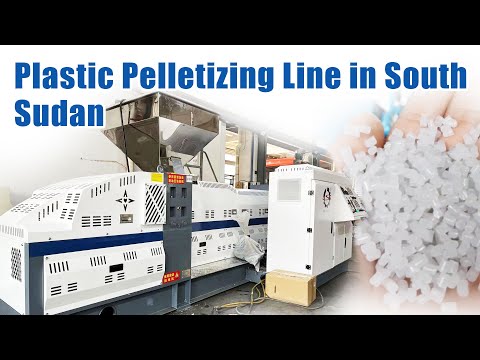
Congratulations! Plastic Pelletizing Line Successfully Operating in South Sudan

If you are interested in the plastic recycling equipment, contact us via WhatsApp/Tel/Wechat:+86 17303831295 Our website: https://plasticsl....